
How to Pack Fragile Items Like a Professional
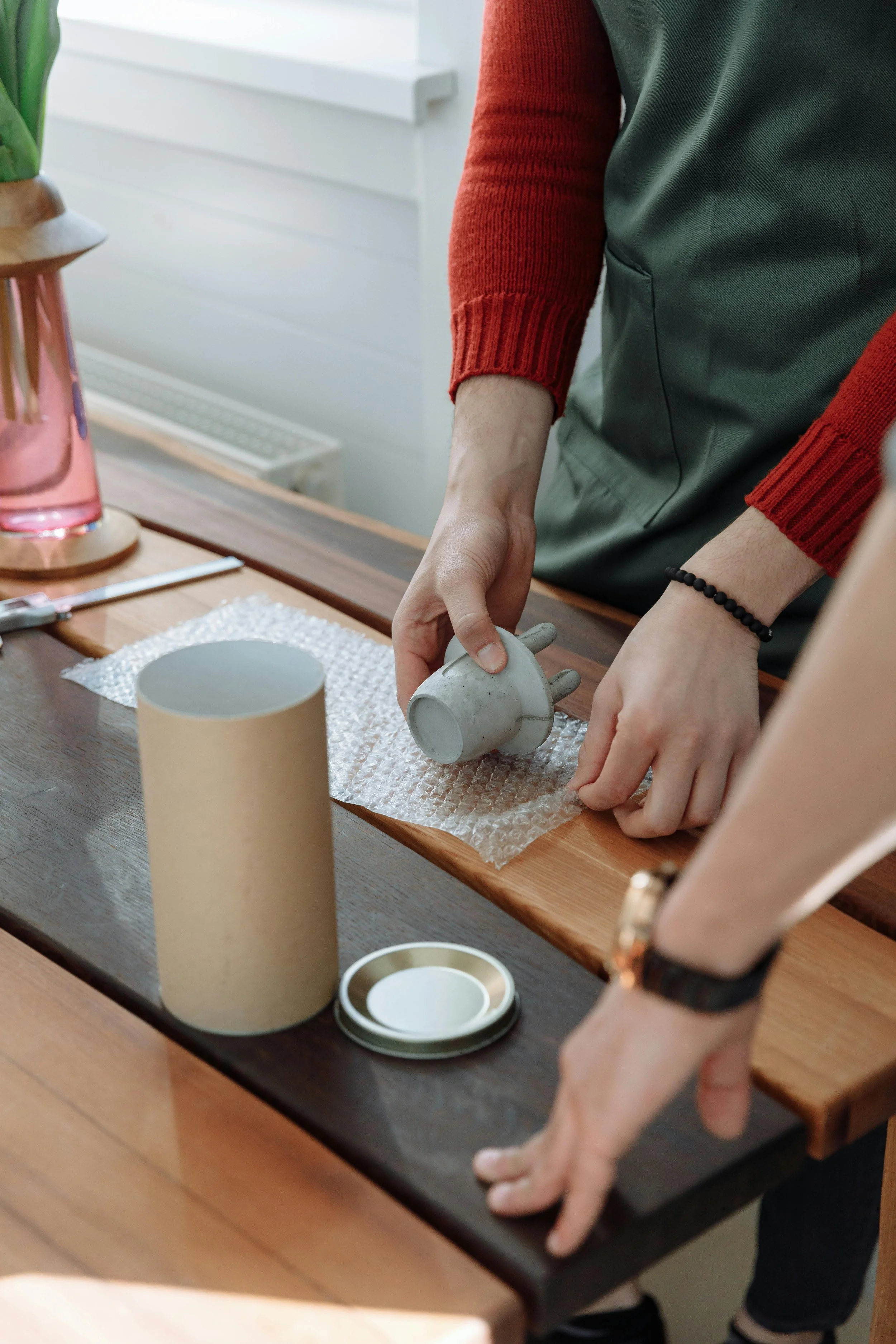
Fragile items are where most DIY moves go wrong. Dishes packed flat. Glassware wrapped in a single sheet of paper. A mirror leaned against the wall of the truck and hoped for the best. These are not unlucky outcomes — they are predictable ones when items are not packed using the techniques that actually protect them.
This guide covers how professional packers approach the most commonly broken items in a home move, and exactly what you can do to protect yours.
Start With the Right Materials
Professional fragile packing starts before a single item is wrapped. Using the wrong materials — or substituting household items for proper packing supplies — is the most common source of breakage.
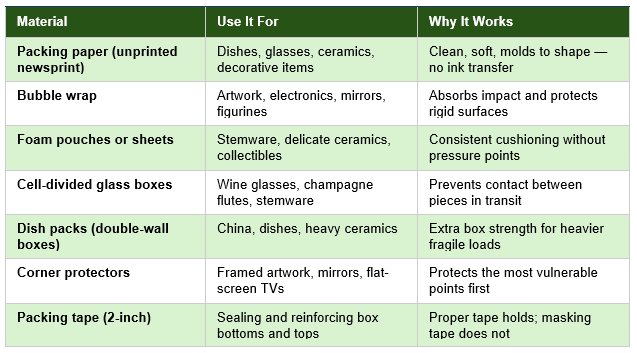
WHAT NOT TO USE: Avoid newspaper directly on items — the ink transfers onto dishes and ceramics. Avoid using clothing, towels, or linens as primary wrapping for genuinely fragile items — they compress too much under weight and do not provide consistent cushioning. Use them to fill gaps in boxes, not as the primary protection layer.
How to Pack Each Category of Fragile Item
Dishes and Plates
Wrap each plate individually in at least two sheets of packing paper. Start at the corner, roll diagonally, and tuck the edges in.
Stack plates vertically — like records in a crate — never flat. Vertical stacking distributes weight across the strongest part of the plate and dramatically reduces breakage.
Use a dish pack (double-wall box) for china and heavier ceramics. Line the bottom with at least 3 inches of crumpled paper before placing any plates.
Fill all gaps with crumpled packing paper so nothing shifts. A box where items can move is a box where items will break.
Label the box FRAGILE and THIS SIDE UP on every side.
Glasses and Stemware
Use cell-divided glass boxes for stemware. Each glass gets its own cell — no contact with neighboring pieces in transit.
For standard glasses without a cell box, wrap each glass individually starting at the base, rolling toward the rim. Tuck extra paper inside the glass for additional internal cushioning.
Pack glasses upright, not on their sides — the vertical position is stronger under the load of other boxes stacked on top.
Never pack glasses directly against each other without wrapping. Even slight contact over a long transit will cause chips or cracks.
Artwork and Framed Pieces
Apply corner protectors to all four corners before any wrapping. Corners are the first point of impact and the most likely point of damage.
Wrap the piece in bubble wrap, securing it with tape. Do not tape directly to the frame — tape to the bubble wrap only.
Use mirror or picture boxes — flat boxes slightly larger than the piece — for anything that cannot be crated. Two people should handle anything large.
Pack framed pieces upright, never flat. Flat stacking concentrates pressure on the glass and frame at the center — exactly where it is most vulnerable.
Mark FRAGILE, DO NOT LAY FLAT, and THIS SIDE UP on every surface of the box.
Electronics
Original packaging is always the best option if you have kept it. The foam inserts are molded to each device and provide the best possible protection.
If original packaging is unavailable, wrap in anti-static bubble wrap — not standard bubble wrap, which can generate static charge that damages components.
Photograph the cable and port setup of every device before disconnecting anything. This saves significant time and frustration on the other end.
Remove batteries from remotes and small electronics before packing — batteries can corrode or leak during a move.
Pack TVs and monitors vertically, never flat. The screen cannot support the weight of other items placed on top of it.
Mirrors and Glass Tabletops
Cover the entire surface with at least two layers of bubble wrap, secured with tape around the edges.
Use a mirror box for anything smaller than 36 inches. For larger pieces, add a wooden frame or crate — available from most moving supply stores.
Write a large X across the glass surface in painter’s tape before wrapping. This holds any broken pieces together if the glass does break and prevents a dangerous shatter.
Always transport mirrors and glass upright on their long edge — never flat — and secure them so they cannot move or tip during transport.
Universal Box Rules for Fragile Items
Regardless of what is inside, every box of fragile items should follow these rules:
Reinforce the bottom of every box with two to three strips of packing tape before loading anything. Box bottoms are the most common point of failure under weight.
Line the bottom of every box with at least 3 inches of crumpled packing paper before placing any item. This is your first cushioning layer.
Never exceed 40–50 lbs per box. Heavy items mixed with fragile ones increase breakage risk significantly.
Fill every box completely before sealing. Half-empty boxes collapse. Use crumpled paper, foam, or soft items to fill any remaining space.
Seal boxes with two strips of tape across the top seam and along each side seam. Never rely on tucked flaps alone.
Write FRAGILE in large letters on every side and the top — not just one side, since boxes are routinely turned during transit.
THE PROFESSIONAL STANDARD: A properly packed fragile box should feel solid when you shake it gently — nothing shifting, nothing rattling. If you can hear or feel movement inside a sealed box, open it and add more cushioning before it goes on the truck. That sound is the sound of something about to break.
Packing fragile items correctly is not complicated — but it is methodical. It requires the right materials, the right techniques, and the discipline to do it properly for every single item rather than rushing through the last few boxes the night before moving day. When done right, the things that matter to you arrive intact.
Want your fragile items packed by professionals?
Home to Home Services brings professional-grade materials and proven packing techniques to every move. Your China, artwork, electronics, and irreplaceable items are packed with the care they deserve — so they arrive exactly as they left.
Contact us today to discuss your move and packing needs.
Call or text: 804-496-1767
About Home to Home Services
Home to Home Services is a full-service home transition company specializing in packing & unpacking, move management, home organizing, and design & space planning. We help homeowners, families, and seniors navigate every step of a move with ease.
