
Why You’re Still Living Out of Boxes 3 Months After Moving (And How to Finally Fix It)
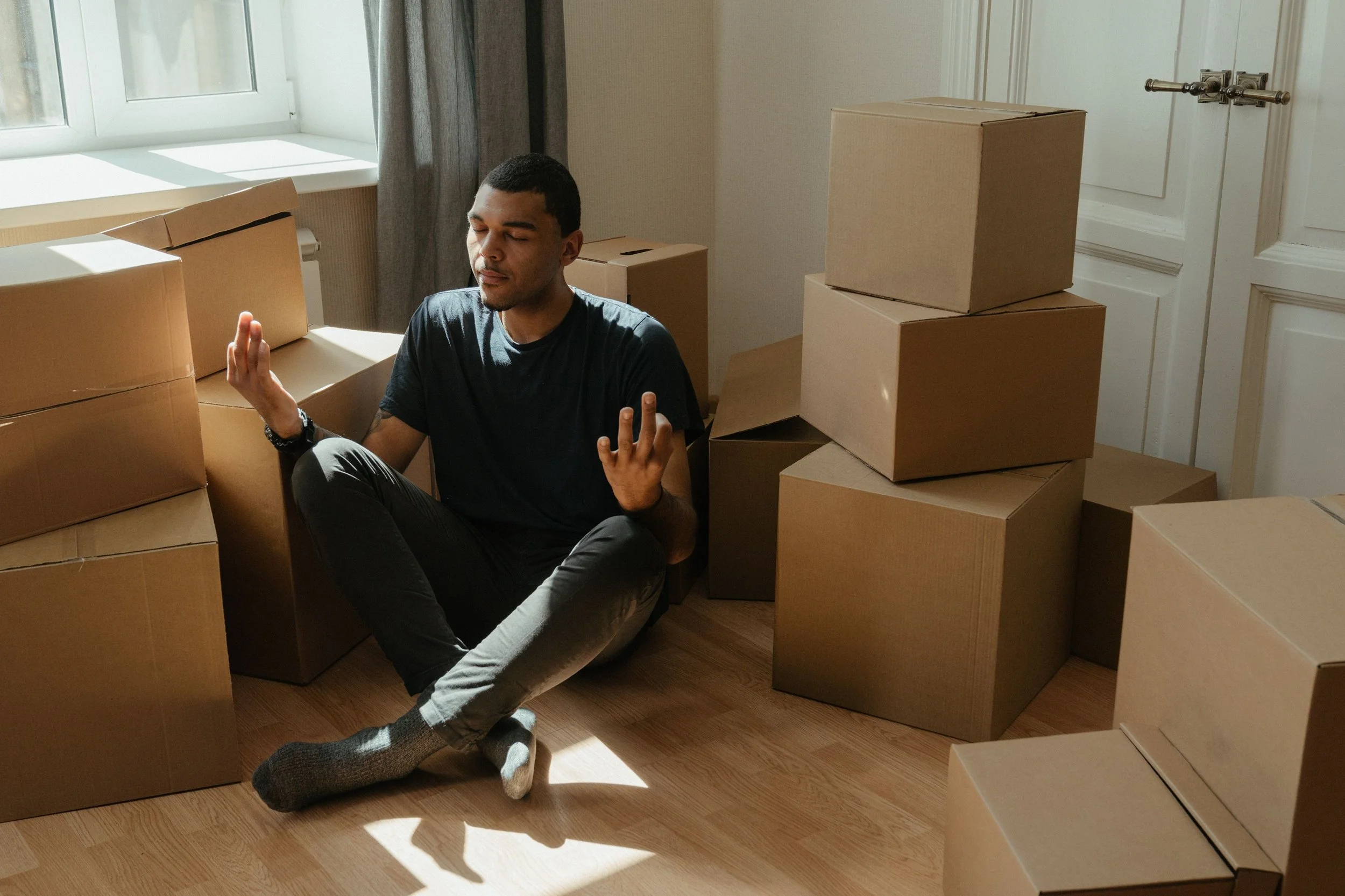
If you moved months ago and there are still boxes in your home — unopened, pushed to corners, stacked in a spare room — you are not alone, and you are not failing.
Most people who reach the three-month mark without finishing their unpacking carry a particular kind of guilt about it. The move is “supposed” to be over. The new home is supposed to feel settled. The boxes are a daily reminder that it isn’t.
And that feeling — that low-grade, background weight of an unfinished home — is one of the more persistent and underrecognized forms of domestic stress.
This guide is written for you. It explains why this happens to so many people who are not disorganized or lazy — just people who moved. And it gives you a clear, honest path to finally finishing what the move started.
FIRST, YOU’RE NOT ALONE: Studies on post-move adjustment consistently show that the majority of people who move have boxes remaining unpacked at the three-month mark. One survey found that more than 40% of people who moved still had unpacked boxes a year later. This is not a personal failing. It is a structural problem with how moves are designed — all the urgency is front-loaded, and what remains feels less pressing until it suddenly becomes something you have lived with long enough to feel ashamed of.
Why It Happened — And Why It’s Not Your Fault
01 - You unpacked the urgent things and ran out of momentum
The bedroom is functional. The kitchen works. The bathroom has what it needs. And somewhere around week two, the remaining boxes just…stopped being urgent. Life filled back in. The boxes got pushed into the corners. And now they have become part of the landscape — invisible in the way that familiar things become invisible over time.
WHAT’S REALLY GOING ON
The boxes are not invisible to your nervous system. Your brain registers them every time you walk past as unfinished business — a low-level stress signal that compounds quietly over weeks and months. The momentum stopped because the problem felt solved enough. It was not.
02 - You don’t know where things should go in the new space
This is more common than people admit. You moved into a home with different layouts, different storage configurations, different room functions than where you came from. The boxes are not just full of things — they are full of decisions about where things belong in a space you are still figuring out. And decisions require energy you have not had.
WHAT’S REALLY GOING ON
When you do not know where something should live, it stays in a box. The unpacking problem is often a space planning problem. Until you decide where things go, they have nowhere to go. This is exactly where professional help makes the biggest difference — not just unpacking boxes but thinking through where everything lands.
03 - The scope feels too large to start
Standing in a room with eight boxes and no clear system for where to begin produces the same response in most people: they close the door and deal with it another day. The task is not actually large. But the absence of a starting point makes it feel enormous. When everything needs to happen at once, nothing happens at all.
WHAT’S REALLY GOING ON
The scope is not as large as it feels. Most post-move unpacking projects — for homes where the essentials are already done — take one or two focused days with professional help. The entire remaining project. Not weeks of grinding through it room by room on evenings that never quite happen.
04 - You feel guilty about it, and the guilt makes it harder
This one matters. Moving is supposed to end. The new home is supposed to feel settled. When it does not — three months in, six months in — there is a weight that goes beyond the boxes themselves. You feel like you should have done this already. You feel like the home is not really yours yet because it is not finished. And that feeling makes it harder, not easier, to start.
WHAT’S REALLY GOING ON
Let the guilt go. It is not a character flaw. It is the entirely predictable outcome of what happened: you moved, which is one of the most demanding things a person does, and then life resumed at full speed before the unpacking was complete. That is not failure. It is normal. And it is completely fixable.
How to Finally Fix It
Step 1 — Stop treating it as something you’ll get to
The unpacking will not happen gradually. Every gradual attempt in the last three months has proven that. It needs a defined moment — a day, a weekend, a booked session — where the project gets the focused attention that the gradual approach never provides. Make it an event on your calendar rather than a task on a list that moves forward indefinitely.
Step 2 — Decide where things go before you unpack them
Walk through your home before opening a single box and make decisions about where categories of things will live. Where will the extra linens go? Where will the tools live? Where will the books go? These decisions do not need to be perfect — they just need to be made. A designated place for every category removes the paralysis that comes from opening a box and not knowing where anything in it belongs.
Step 3 — Start with the room you avoid most
The room you walk past and close the door on is almost always the right place to start. Not because it is most urgent, but because clearing it first removes the biggest psychological weight. The rooms with boxes becomes the rooms you avoid. The rooms you avoid become the rooms you stop noticing. Starting there breaks the avoidance loop faster than any other approach.
Step 4 — Consider that you might not need to do this alone
Professional unpacking services exist precisely for this situation — not just for moves in progress, but for moves that stalled. A professional organizer can come into a home three months after move-in, work through remaining boxes systematically, set up every room with functional systems, and leave your home fully unpacked in a focused one or two-day session. You do not need to have moved recently to book unpacking help. You just need to be done living out of boxes.
WHAT IT LOOKS LIKE WHEN IT’S DONE: Every box is gone. Every item has a home. Every room works the way it is supposed to. You stop spending mental energy on the unfinished parts of the house. You stop feeling a flicker of guilt when you walk past the spare room. The home finally feels like yours — not a temporary arrangement, but the place you actually live. That shift happens faster than most people expect. And it stays.
The boxes do not define how you feel about your home. But they do affect it, every day, in ways that compound quietly until you decide to address them. You do not have to live with this any longer. The solution is a focused session, a clear plan, and the willingness to ask for help if you need it.
The move is not over until the home is finished. Finishing it is entirely possible — and closer than it feels from where you are standing right now.
Ready to finally finish the move?
Home to Home Services provides professional unpacking and home setup for moves at any stage — including moves that happened months ago. We come in, work through every remaining box, set up every room with functional systems, and leave your home completely settled. One focused session. Finally done.
Contact us today to for a free consultation.
Call or text: 804-496-1767
About Home to Home Services
Home to Home Services is a full-service home transition company specializing in packing & unpacking, move management, home organizing, and design & space planning. We serve homeowners, families, and seniors throughout Richmond, Henrico County, and the greater Richmond area.
