
7 Storage Solutions That Make Small Homes Show Bigger
A small home does not have to feel small. The experience of a space — how large it feels, how functional it is, how it reads to people living in it and visiting it — is shaped far more by how it is organized than by its actual square footage. Two identically sized apartments can feel completely different based on how storage is used.
These seven storage solutions are the ones that produce the most consistent, most visible impact in small homes. Some involve products. One involves nothing but the willingness to make decisions. All of them are achievable without renovation.
THE SMALL HOME PRINCIPLE: The goal of small home storage is not to cram more in. It is to eliminate visual clutter from surfaces and floors while keeping everything you actually use accessible. Visible floor space reads as room size. Clear surfaces read as generous counter space. Storage that is hidden or organized reads as a home that is larger than its footprint.
01 - Vertical Storage: Use the Full Height of Every Wall
Most small homes are organized horizontally — items spread across floors, counters, and low shelves. The vertical space above eye level is almost always completely unused. This is the most consistently underutilized storage opportunity in any small home, and exploiting it costs far less than moving to a bigger one.
HOW TO DO IT
Install open shelving or closed cabinets that run from waist height to the ceiling rather than stopping at eye level. In kitchens, use the space above cabinets for infrequently used items. In living rooms, floor-to-ceiling bookshelves draw the eye upward and make ceilings feel higher while dramatically increasing storage capacity. In bedrooms, use the space above the closet rod for seasonal storage bins.
THE IMPACT
Vertical storage does not just add capacity — it creates the visual impression of height, making rooms feel taller and larger than their actual dimensions.
02 - Under-Bed Storage: Every Bed is a Storage Unit
A standard queen bed sits approximately 13-14 inches off the ground. That is a significant volume of space that in most homes holds nothing but dust. In a small home, every square foot of that space is a legitimate storage asset.
HOW TO DO IT
Use low-profile rolling bins or purpose-built under-bed storage containers for seasonal clothing, extra linens, shoes, or rarely used items. Bed risers can increase the clearance to 6-8 inches of additional height if the current frame sits too low. For platform beds with no clearance, storage ottomans at the foot of the bed serve the same function with a different form.
THE IMPACT
A queen bed at standard height provides approximately 30 cubic feet of usable storage space underneath — roughly equivalent to a small closet. Using this space removes items from visible surfaces elsewhere in the home.
03 - Door-Mounted Storage: Every Door Has a Back
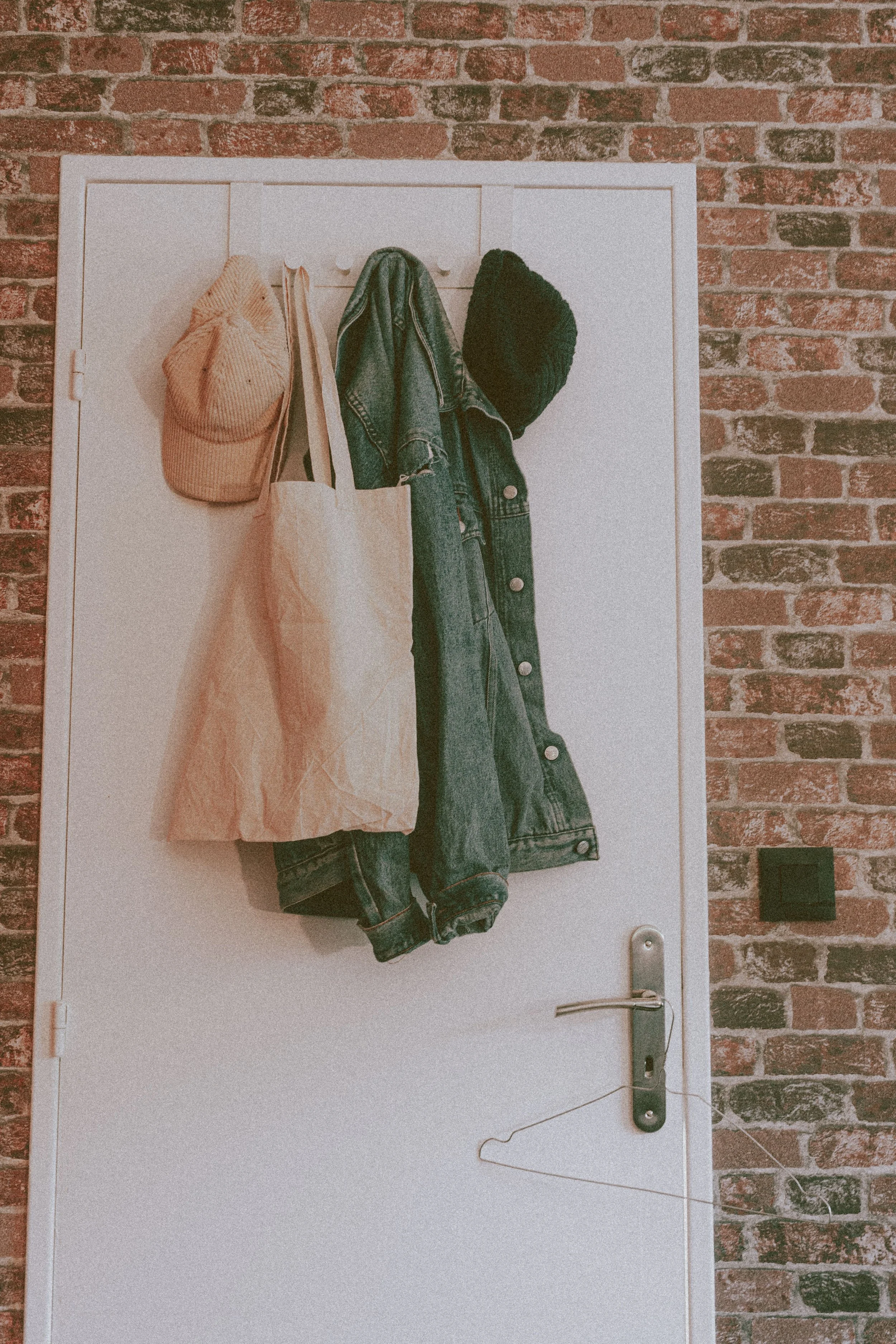
The back of every door in a small home is a flat, vertical surface that is typically wasted. Over-the-door organizers, hooks, and mounted storage systems turn this dead space into functional storage without occupying any floor area or requiring installation.
HOW TO DO IT
Over-the-door organizers work in pantries (for spices, condiments, and small food items), bathrooms (for toiletries and cleaning supplies), bedrooms (for shoes, accessories, and small folded items), and home offices (for supplies and documents). Command hooks on the back of cabinet doors hold pot lids, cleaning tools, and frequently used items within reach. Over-the-door shoe organizers are among the highest-utility small-home products available at any price point.
THE IMPACT
In a typical small home with eight interior doors, over-the-door storage can add the equivalent of two to three shelving units of organized, accessible storage without taking up a single inch of floor space.
04 - Furniture with Built-In Storage: Every Piece Should Earn Its Place
In a small home, furniture that serves only one function is a luxury. Every piece of furniture that sits on the floor and occupies visual space should be evaluated for whether it can also hold something. If it cannot, there may be a version of the same piece that does.
HOW TO DO IT
Ottoman with interior storage in place of a coffee table. Bed frame with built-in drawers rather than open legs. Dining bench with a hinged seat that opens to reveal storage. Entryway bench with shelving below and hooks above. Side tables with drawers rather than open frames. These are not interior design compromises — they are intelligent decisions about how small spaces can work harder.
THE IMPACT
Replacing three standard furniture pieces with storage-integrated versions in a small living room can eliminate the need for a separate storage cabinet, reducing furniture count while increasing total capacity.
05 - Kitchen Cabinet Organizers: Double the Space You Already Have
Kitchen cabinets in small homes are almost always less efficient than they appear. The primary reason is that standard cabinets are designed around a single shelf height that does not match the items being stored. The result is wasted vertical space within every cabinet and items stacked in unstable configurations to compensate.
HOW TO DO IT
Cabinet shelf risers create two levels within a single cabinet, allowing plates or pantry items to be stored in rows rather than stacked. Lazy Susans in corner cabinets make the awkward dead space accessible. Pull-out cabinet drawers turn deep lower cabinets into sliding storage that does not require excavating the back. Stackable bins in pantry cabinets organize by category and maximize every inch of shelf depth.
THE IMPACT
In most kitchens, these four additions together effectively double the usable cabinet space without any renovation. The kitchen reads as significantly more functional — and therefore more spacious — to anyone using it.
06 - Entryway Organization: The Room That Sets the Tone
In a small home, the entryway is often the most chronically disorganized space — because it lacks systems, not because it lacks space. Shoes, bags, coats, keys, and mail accumulate at the entry because there is nowhere designated for any of them. The result is a cluttered threshold that makes the entire home feel smaller and more chaotic from the moment someone walks in.
HOW TO DO IT
A wall-mounted entry system with hooks for coats and bags, a shelf for keys and mail, and storage below for shoes addresses all of the common entry accumulation in a single, compact vertical footprint. In a very small entry, a single row of wall hooks and a small bench with storage below accomplishes the same function in even less space. The key is designated places for every item that arrives at the door.
THE IMPACT
An organized entry changes the first impression of a small home entirely. It signals order throughout the home before a visitor has seen any other room — and it changes how residents feel arriving home every day.
07 - Decluttering First: The Foundation Every Other Solution Depends On
This one is different from the other six. It is not a product or a storage system. It is the prerequisite that determines whether any of the other six solutions actually work. In a small home, organizing systems cannot overcome volume. If there is too much stuff for the space, no amount of clever storage will resolve it.
HOW TO DO IT
Before installing any of the solutions above, conduct an honest room-by-room declutter. The goal is simple: every item in the home should either be used regularly, have sentimental value, or be there for a specific purpose. Items that do not meet any of these criteria are candidates for donation, resale, or removal. This process does not need to be dramatic or minimalist — it just needs to be honest.
THE IMPACT
A small home that has been genuinely decluttered and then organized with even three or four of the solutions above will feel dramatically larger than a small home that has been organized around excessive volume. The storage solutions amplify the result of the declutter. Without the declutter, they paper over the problem.
THE COMBINATION EFFECT: No single storage solution transforms a small home. Three or four implemented together, on top of a genuine declutter, do. The impact is multiplicative rather than additive — each solution reinforces the others, and the cumulative result is a home that lives and reads significantly larger than its footprint. Small homes that are well-organized consistently outperform larger disorganized homes in every metric that matters: daily function, comfort, and resale value.
Want help implementing these in your home?
Home to Home Services provides professional home organizing and space planning throughout Richmond, Henrico County, Chesterfield County, and the greater Richmond area. We assess your specific home, recommend the right solutions for your space and budget, and implement them completely.
Contact us today for a free consultation.
Call or text: 804-496-1767
About Home to Home Services
Home to Home Services is a full-service home transition company specializing in packing & unpacking, move management, home organizing, and design & space planning. We serve homeowners, families, and seniors throughout Richmond, Henrico County, and the greater Richmond area.
