
8 Valuable Items Families Often Discard During Estate Cleanouts
Estate cleanouts happen under conditions that are almost perfectly designed to produce mistakes: grief, time pressure, exhaustion, and the need to make hundreds of decisions about belongings that may span a lifetime. In this environment, valuable items are routinely donated, discarded, or given away at a fraction of their worth — not through negligence, but through the entirely predictable result of being asked to evaluate things outside your knowledge while managing everything else at once.
These eight categories are the ones where we most consistently see families lose value they did not know they had. Read this list before sorting begins. Not after.
THE MOST IMPORTANT RULE: Nothing leaves the home until it has been seen by someone who knows what they are looking at. An estate sale company, appraiser, auction house representative, or specialist dealer will almost always do a preliminary walk-through at no cost. This single step has saved Richmond and DC-area families from giving away thousands of dollars in items they did not recognize as valuable. Book the walk-through before the sort begins.
1 — Vintage and Costume Jewelry
Jewelry is one of the most consistently undervalued categories in estate cleanouts. Families often sort through jewelry boxes quickly, keeping pieces they recognize as gold or gemstone and discarding everything else as “costume” or “fake”. What gets discarded this way regularly includes unsigned pieces by recognized designers, early-century paste jewelry that has become highly collectible, Bakelite pieces from the 1930s and 40s worth hundreds of thousands of dollars, and signed pieces from names like Miriam Haskell, Trifari, Eisenberg, and Monet that non-collectors would have no reason to recognize.
WATCH FOR: Any piece that appears older than 1970. Plastic jewelry with unusual colors or patterns (Bakelite). Pieces with signatures or marks on the clasp or backing. Sets stored together in original boxes.
BEFORE YOU DISCARD: Have every piece of jewelry reviewed by an appraiser or estate sale company before donating or discarding anything. The cost of a walk-through is almost always recovered many times over.
2 — Original Artwork and Prints
Artwork stored in closets, hung in secondary bedrooms, or leaning against garage walls is routinely dismissed as decorative. Oil paintings, watercolors, pastels, and even framed prints in estate environments can be original works by artists with documented market value — or limited edition prints that have appreciated significantly. The challenge is that a painting’s apparent quality does not correlate with its value. An unremarkable-looking landscape by a documented regional artist can be worth more than an impressive-looking reproduction.
WATCH FOR: Any work on canvas or board rather than paper. Signatures on the front or back of the work. Works in original frames from earlier eras. Any piece with documentation, labels, or gallery stickers on the back.
BEFORE YOU DISCARD: Photograph the front and back of any framed or unframed artwork before making any disposition decision. A reverse image search and a conversation with a local auction house or appraiser can resolve value questions quickly.
3 — China, Silver, and Formal Dishware
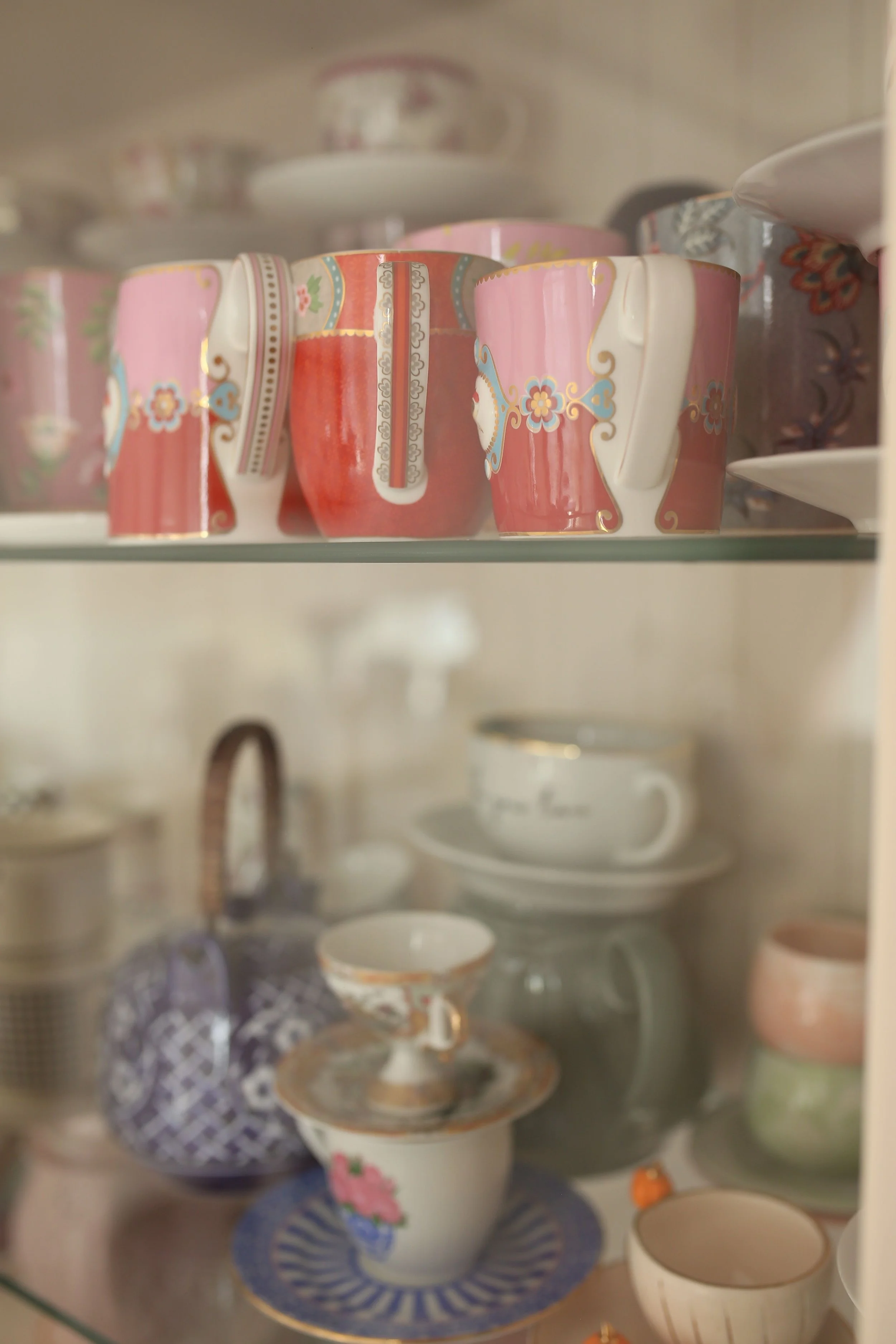
Complete sets of China and Sterling silver flatware are frequently donated or discarded by families who do not entertain formally and see no use for them. Sterling silver flatware — not silverplate, but actual Sterling — has intrinsic metal value regardless of its pattern or condition, and named patterns in complete sets carry additional collector value. Named China patterns from manufacturers like Lenox, Wedgwood, Spode, Limoges, and Meissen in complete condition have active secondary markets. A full service for twelve in a desirable pattern can represent significant value.
WATCH FOR: Any flatware marked “Sterling” or “925” rather than “Silverplate” or “EP”. China with manufacturer’s marks on the bottom. Complete sets stored in original cases or boxes. Serving pieces accompanying place settings.
BEFORE YOU DISCARD: Sterling silver has a floor value based on weight that exists regardless of pattern or condition. Any flatware marked Sterling should be assessed for metal value before any other consideration.
4 — Vintage Linens and Textiles
Linens packed in cedar chests or stored in attic boxes are among the most overlooked valuable categories in estate environments. Hand-embroidered tablecloths, tatted lace, quilts in documented patterns, and needlework samplers have active collector and decorator markets. Quilts in particular — especially those in Americana patterns, signed quilts, or those with documentation of their maker — regularly appear at auction for hundreds or thousands of dollars. The fact that a textile has been stored rather than displayed does not indicate its value.
WATCH FOR: Any quilt with unusual pattern, exceptional workmanship, or visible age. Embroidered or lace items stored in tissue. Textiles with maker’s names or dates stitched or marked on them. Any piece stored with obvious care in protective wrapping.
5 — Coins, Stamps, and Paper Money
Collections of coins, stamps, and paper money are routinely sorted into donation bags or discarded when families encounter them without context for their value. A coin collection assembled over decades can represent substantial value in ways that are entirely invisible to a non-collector sorting through containers. Early American coins, silver dollars, Mercury dimes Standing Liberty quarters, and any coin pre-dating 1964 have metal value at minimum. Error coins, key dates, and coins in high grades can be worth dramatically more. Stamp collections, particularly those assembled before 1940, can include stamps worth significant sums.
WATCH FOR: Any coin dated before 1965 — these were minted in silver. Any organized collection in albums or folders. Currency in unusual denominations or from earlier eras. Any stamp collection regardless of apparent organization.
BEFORE YOU DISCARD: Any coin collection should be reviewed by a coin dealer before a single coin is spent, donated, or discarded. The face value of coins in circulation is rarely their actual value.
6 — Vintage Tools and Workshop Equipment
Hand tools manufactured before the 1970s — planes, chisels, saws, braces, and levels from makers like Stanley, Millers Falls, Disston, and others — have a substantial collector market among woodworkers and tool enthusiasts. A Stanley No. 45 combination plane in working condition can be worth more than a modern vintage socket chisels in their original roll can be worth more than a modern equivalent set many times over. Families who encounter a workshop full of old tools and assume they have no value beyond function are regularly mistaken.
WATCH FOR: Any hand tool with a visible manufacturer’s mark. Planes, particularly those with decorative frogs or unusual features. Sets of tools in original cases or rolls. Any tool that appears to be made of rosewood, ebony, or other quality hardwoods.
7 — Mid-Century Modern Furniture
Furniture manufactured between roughly 1945 and 1975 that look dated to a family sorting an estate may be exactly what the current design market is seeking. Pieces by Eames, Knoll, Herman Miller, Dunbar, Paul McCobb, and other mid-century manufacturers — and their lesser-known contemporaries — have markets that have grown substantially over the past two decades. The problem is that mid-century furniture often looks unremarkable to an untrained eye, and families regularly donate or sell at garage sale prices pieces that would bring multiples of that value at auction or through a dealer.
WATCH FOR: Any furniture with unusual leg shapes — splayed, tapered, or hairpin. Pieces with visible manufacturer’s marks or labels on the underside. Upholstered pieces with original fabric in unusual patterns. Any furniture that appears to be designed rather than mass-produced.
BEFORE YOU DISCARD: Photograph the underside and back of any furniture piece before making a disposition decision. Labels, marks, and construction details visible there can resolve value questions that surface appearance cannot.
8 — First Editions, Rare Books, and Documents
Books are almost universally sorted for donation without assessment in estate environments — and this is one of the most consistent sources of overlooked value. First editions of significant works, books, with inscriptions or signatures from their authors, early printings of important texts, and books in decorative bindings with illustrated plates all have collector markets. Alongside books, documents such as signed letters, early maps, original photographs, military papers, and legal documents from earlier eras have active auction markets. The date and apparent ordinariness of a document does not predict its value.
WATCH FOR: Any book published before 1900 regardless of subject. Books with copyright page notations of “First Edition” or “First Printing”. Inscribed or signed books. Any illustrated book with hand-colored plates. Documents bearing signatures, wax seals, or official markings.
BEFORE YOU DISCARD: A book dealer or rare documents specialist will typically do a walk-through assessment at low or no cost. This is worth requesting for any estate with a substantial book collection.
HOW PROFESSIONAL ESTATE ORGANIZERS PROTECT AGAINST THIS
When Home to Home Services manages an estate cleanout, we identify and flag items across all eight of these categories before sorting begins. We photograph items of potential value, set them aside for assessment, and coordinate with estate sale companies and appraisers before anything leaves the home. Nothing of potential monetary or sentimental value is donated, discarded, or given away without the family’s informed decision. For families in Richmond and the Washington, DC area managing an estate cleanout, this is one of the most concrete ways professional help protects the family’s interest.
Managing an estate cleanout in Richmond or DC?
Home to Home Services provides compassionate, professional estate cleanout support for families throughout Richmond, VA and Washington, DC. We identify items of potential value before anything leaves the home, coordinate with appraisers and estate sale companies, and ensure the family makes informed decisions about every item.
Contact us today to discuss your situation.
Call or text: 804-496-1767
About Home to Home Services
Home to Home Services is a full-service home transition company based in Richmond, VA, specializing in packing & unpacking, move management, home organizing, and design & space planning. We serve homeowners, families, and seniors throughout Richmond, VA, Washington, DC, and surrounding areas.
